

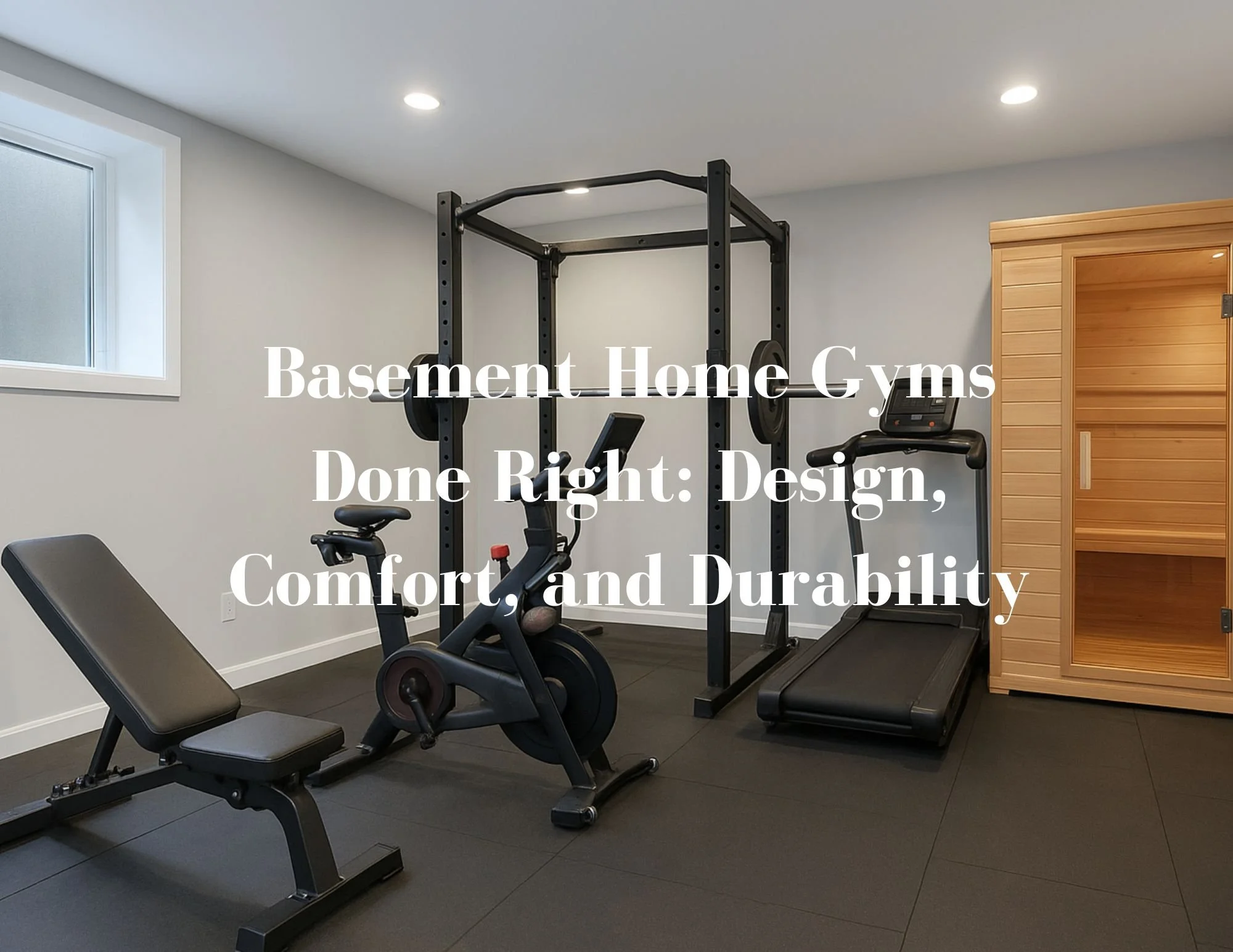
Basement Home Gyms Done Right: Design, Comfort & Durability
A basement home gym is one of the smartest ways to turn underused square footage into a space that improves daily life. In Colorado especially, basements make ideal workout environments—cool, quiet, and separate from the main living areas.
That said, a successful basement gym requires more than just rolling in a treadmill and a rack of weights. Flooring, ventilation, layout, and future upgrades (like a sauna) all need to be considered before construction begins.
Here’s what homeowners should know.
Why Basements Make Great Home Gyms
Basements offer several advantages for fitness spaces:
Naturally cooler temperatures
Reduced noise transmission to the rest of the home
Privacy for early-morning or late-night workouts
Large, flexible footprints
When designed correctly, a basement gym can feel like a private studio rather than an afterthought.
Flooring: Protect the Space and Your Body
Flooring is the single most important element in a basement gym.
Best Flooring Options
Rubber flooring (rolled or tiles)
Ideal for weight training, cardio equipment, and high-impact workouts. Durable, slip-resistant, and forgiving on joints.Rubber + LVP hybrid zones
Great for mixed-use gyms where stretching, yoga, or light cardio share space with equipment.Interlocking foam mats
Budget-friendly but less durable long-term.
What to Avoid
Carpet (traps moisture and odors)
Traditional hardwood
Basic laminate without moisture protection
✅ Pro tip: If you plan to drop weights, invest in thicker rubber (¾” or more) in lifting zones to protect both the slab and your equipment.
Ventilation & Air Quality: Often Overlooked, Always Important
Basements are enclosed by nature, and workouts generate heat and moisture. Without proper ventilation, gyms can quickly feel stuffy or uncomfortable.
Key Ventilation Considerations
Dedicated HVAC supply and return to keep air circulating
Dehumidification to manage moisture from sweating
Exhaust fans for high-intensity spaces
Ceiling height planning to avoid obstructing airflow with ductwork
✅ Colorado note: Our dry climate helps, but a sealed, finished basement still needs active air movement—especially during intense workouts.
Layout: Plan for Movement, Not Just Equipment
A common mistake is designing around individual machines rather than how the space will actually be used.
Smart Layout Tips
Allow clearances around equipment for safe movement
Create zones (weights, cardio, mobility/stretching)
Leave open floor space for bodyweight training
Position mirrors carefully to enhance form—not overwhelm the space
Keep pathways clear for safety
✅ Pro tip: Think about ceiling height early—especially for overhead lifts, pull-ups, or tall cardio equipment.
Electrical Planning: Power Your Workout (and Future Sauna)
Home gyms are increasingly tech-forward—and that requires thoughtful electrical planning.
Gym Electrical Needs
Dedicated circuits for treadmills, bikes, and rowers
Adequate outlets for TVs, speakers, and charging stations
Proper lighting for safety and visibility
GFCI protection where required
Considering a Sauna?
If you’re thinking about adding a sauna now or in the future, electrical planning becomes even more critical.
Most home saunas require:
240V dedicated circuits
Increased electrical panel capacity
Proper ventilation and moisture management
Clearance and layout planning
✅ Pro tip: Even if you don’t install the sauna right away, planning the electrical and space requirements during the remodel can save significant cost later.
Lighting: Functional First, Atmosphere Second
Good lighting impacts both safety and motivation.
Bright, even overhead lighting for lifting areas
Dimmable or layered lighting for yoga or recovery zones
Avoid harsh shadows that interfere with form checks
Consider wall-mounted fixtures to preserve ceiling height
Moisture & Durability Considerations
Even in dry climates, gyms create moisture.
Use moisture-resistant wall materials
Avoid MDF or materials that swell
Choose sealed flooring systems
Ensure proper vapor barriers under flooring
✅ A well-built gym should handle sweat, humidity, and daily use without degrading over time.
Final Thoughts
A basement home gym is an investment in both your home and your health—but only if it’s designed with performance, comfort, and durability in mind.
By thinking through flooring, ventilation, layout, and electrical needs (especially if a sauna is part of the plan), homeowners can create a gym that feels intentional, motivating, and built to last.